
Supply Chain
Inventory
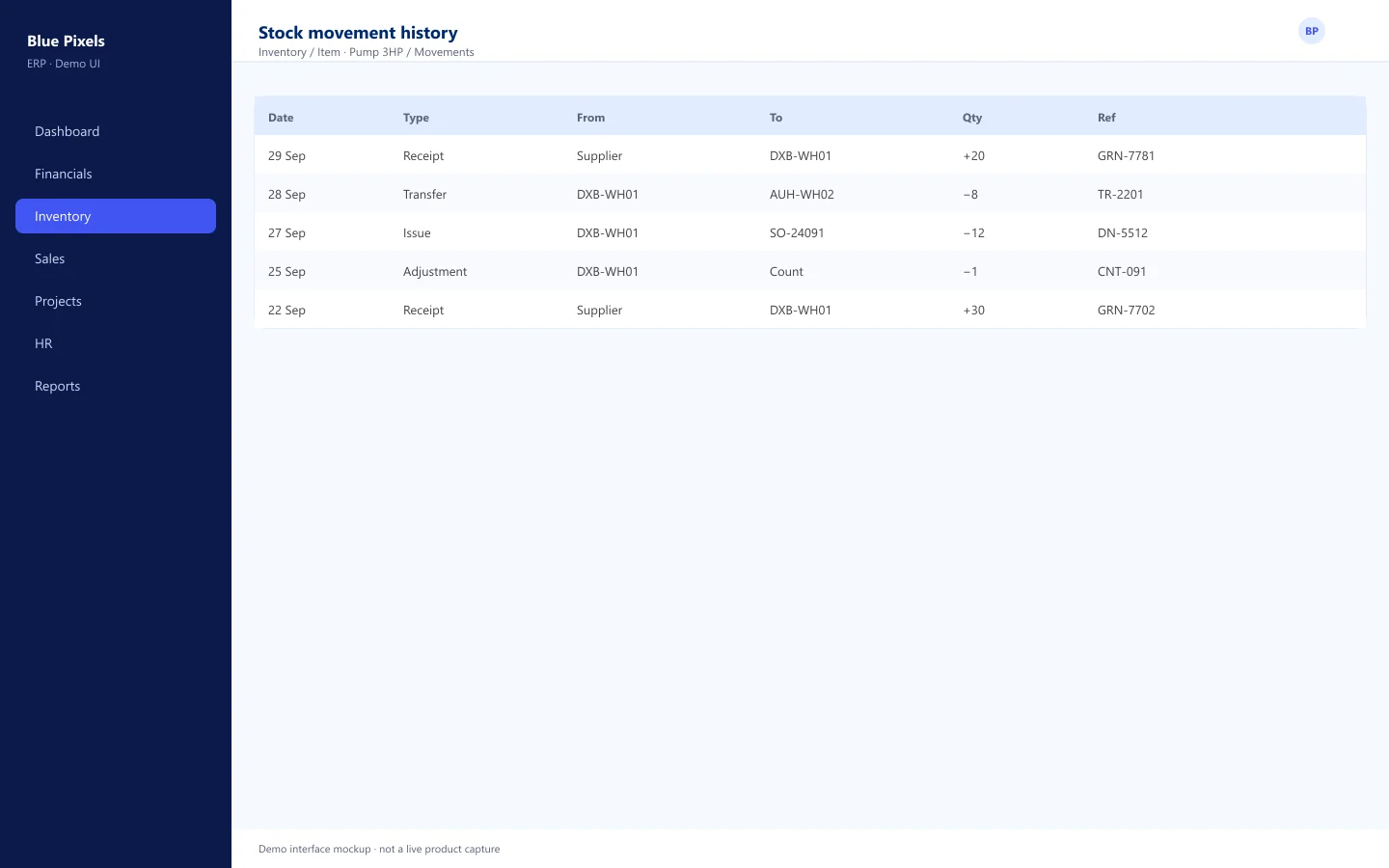
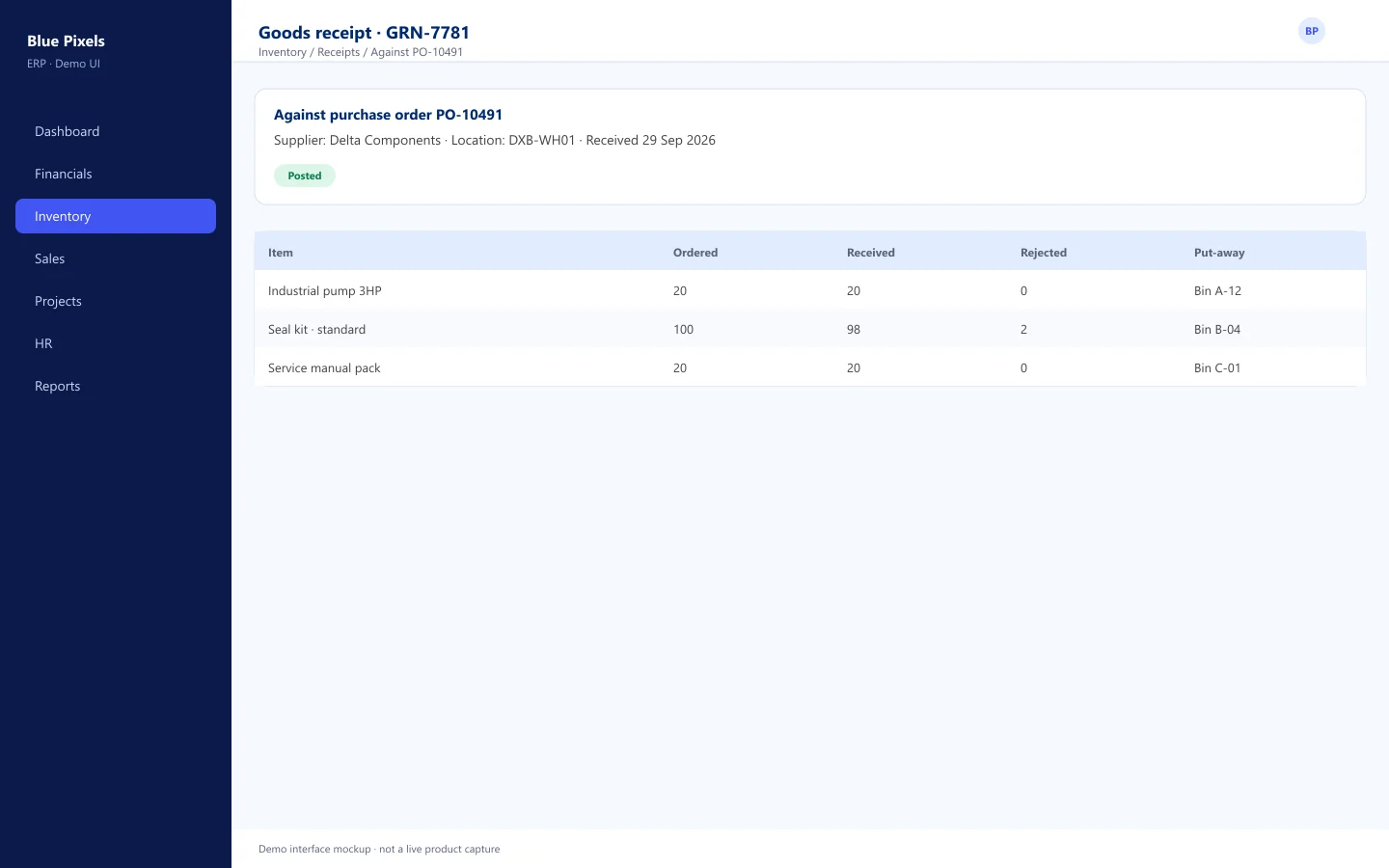
Stock tracked by item, location and batch, with movements valued as they happen. Receipts, issues, transfers and adjustments all post to the ledger, so the stock account and the stock on the shelf describe the same thing.
What Inventory covers
Multi-location stock
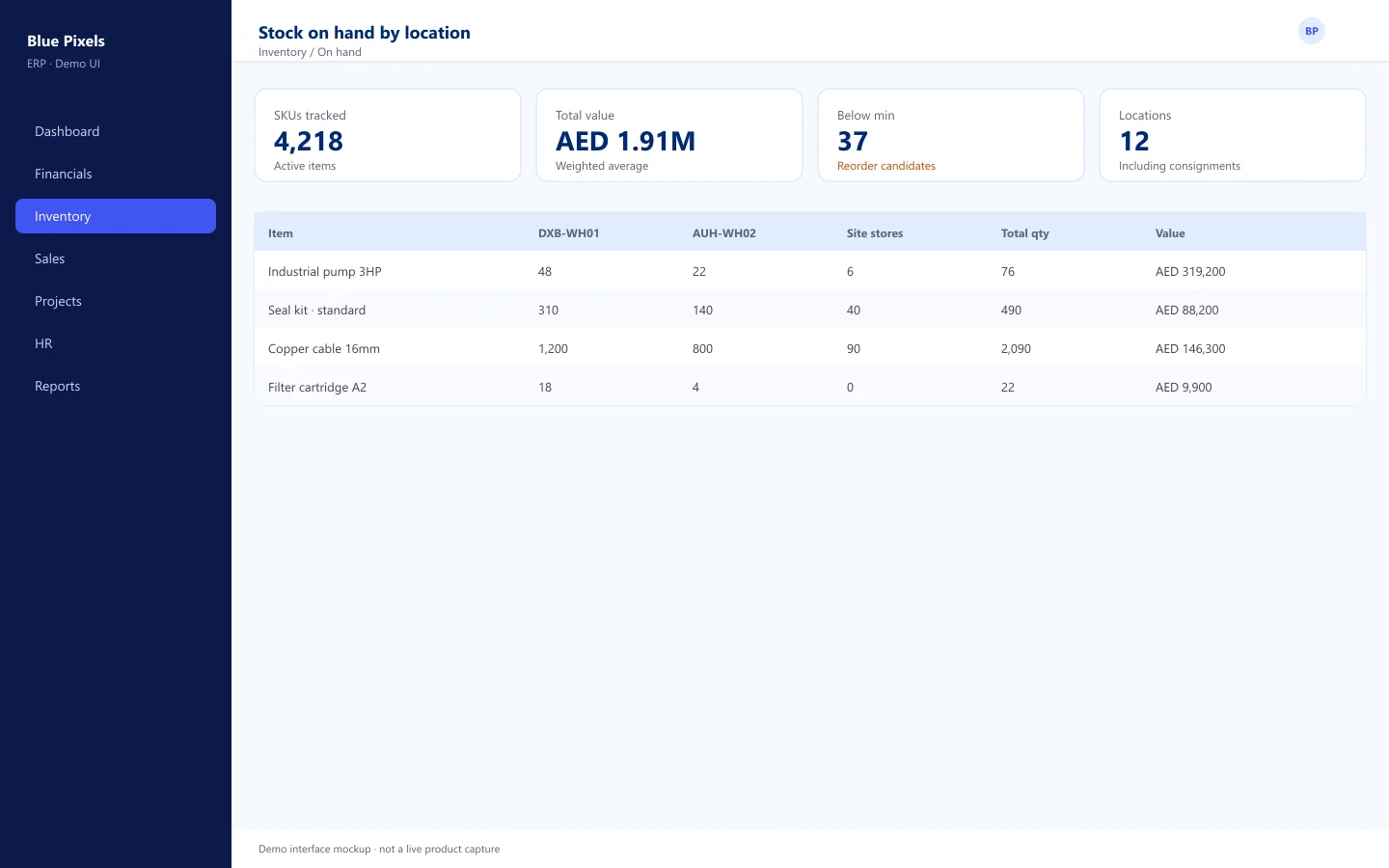
Warehouses, branches, bins and in-transit stock.
Valuation
Standard, average or FIFO costing with landed cost.
Transfers
Inter-branch movement with in-transit visibility.
Stock counts
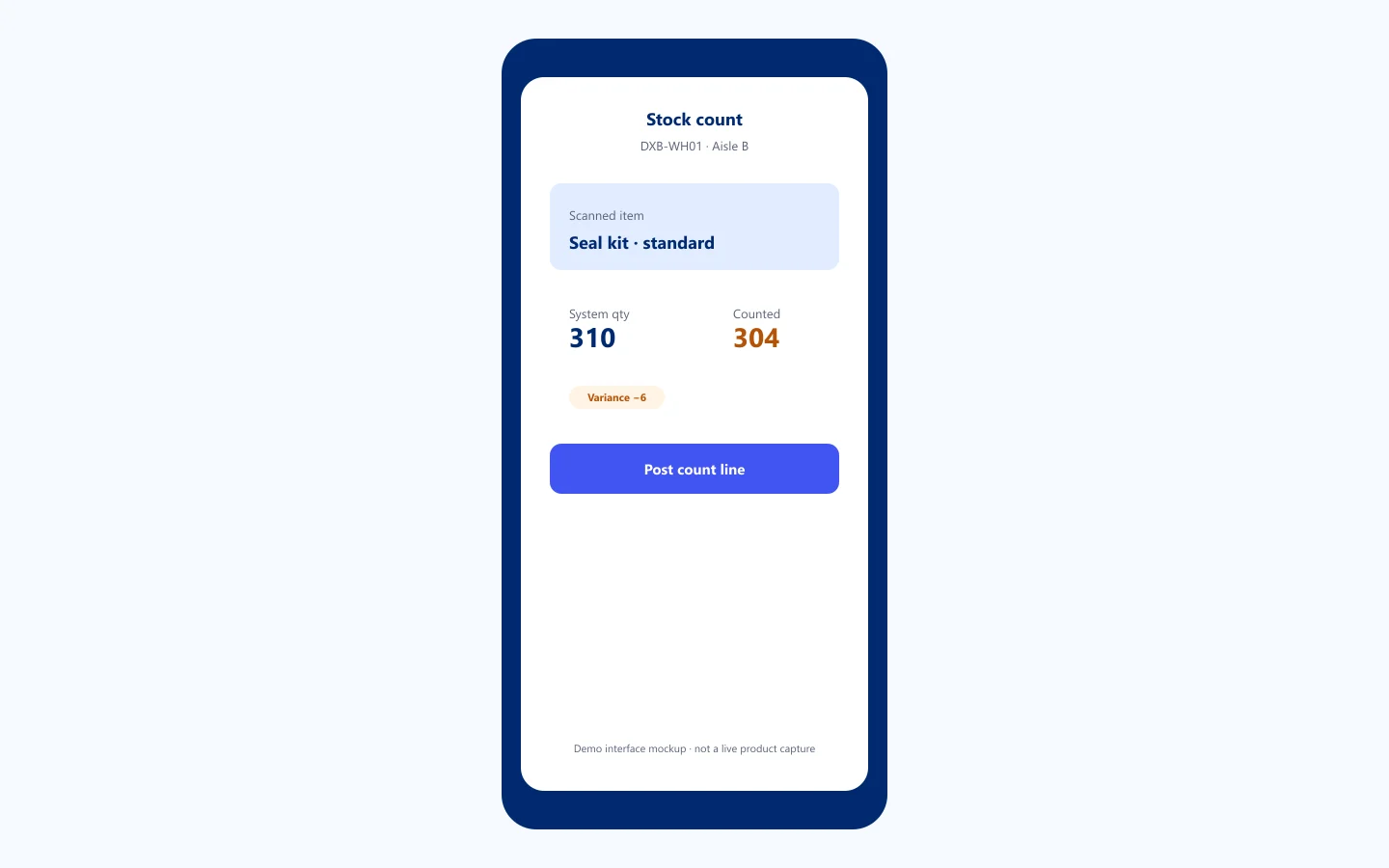
Cycle counts and full counts with variance approval.
Batch and serial
Traceability by batch, serial number and expiry.
Reorder rules
Minimum levels that raise requisitions automatically.
How Inventory works
Stock that agrees with the ledger
Every movement is valued at the moment it happens and posts to the stock account. Reconciling a warehouse system against the accounts stops being a monthly exercise because the two were never separate.
- Movements valued on posting
- Landed cost distributed across a shipment
- Variance from counts routed for approval before it posts
Counts from the warehouse floor
Cycle counts are entered on a phone against a location rather than transcribed from a clipboard. Variances above a threshold hold for approval rather than posting silently.
In the interface
What changes when you run it
- Stock value and stock quantity that reconcile by construction
- Visibility of stock in transit between branches
- Traceability by batch and serial where it is required
- Reorder points that raise requisitions rather than reminders
Ready to see it on your operating model?
A focused walkthrough — your projects, leasing, finance and reporting. Not a slide deck.